
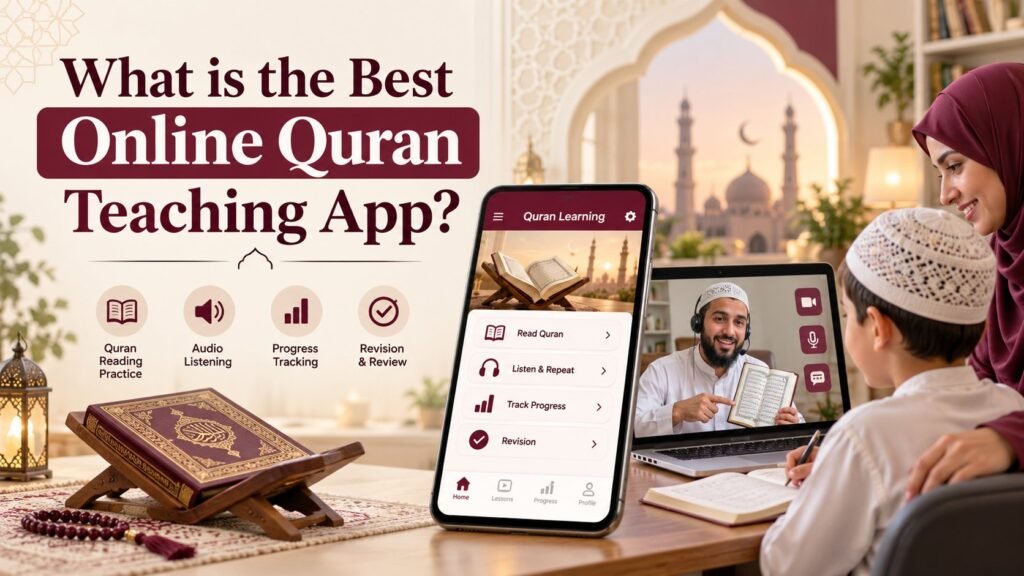
Finding The Best online Quran teaching app can make Quran learning more convenient for children, adults, beginners, and busy families. With many Quran apps and online learning platforms available, choosing the right option depends on your learning goals, current reading level, preferred learning style, and need for teacher guidance. Some apps help you read the Quran, listen to recitations, learn basic Arabic letters, and revise previously learned verses. Others connect students with teachers for live online Quran classes. Understanding the difference can help you choose a learning method that fits your needs.
At Online Quran Academy, We believe that Quran learning should be approached with patience, consistency, and care. Digital tools can support your daily practice, while guidance from a suitable Quran teacher can help you work on pronunciation, Tajweed, and reading mistakes. In this guide, we will explain what to look for in an online Quran teaching app, compare apps with live online classes, and share practical tips for choosing a suitable Quran learning method.
Quick Answer: Which Is the Best Online Quran Teaching App?
The best online Quran teaching app depends on what you want to learn. If you want to listen to Quran recitations, follow the Arabic text, or revise familiar verses, a Quran reading and audio app may be enough for your needs. If you are a beginner, want to improve your Tajweed, or need help correcting pronunciation, live lessons with a qualified Quran teacher may be more suitable. For many learners, combining both methods is a practical approach. You can attend live classes for instruction and feedback, then use a Quran app to practise between lessons.
Before choosing an app or online academy, consider these factors:
- Clear and readable Arabic Quran text
- Reliable audio recitations for listening and revision
- Learning resources appropriate for your level
- Access to a suitable teacher when you need personal guidance
- Clear pricing, privacy information, and child-safety arrangements
- A learning schedule you can maintain consistently
No single app is ideal for every learner. The right choice is the one that supports your goals and helps you develop a consistent learning routine.
What is an Online Quran Teaching App?
An online Quran teaching app is a digital tool that helps people read, listen to, study, or practise the Quran using a smartphone, tablet, or computer. Depending on its features, an app may provide Arabic Quran text, audio recitations, verse repetition, bookmarks, translation, Tajweed learning materials, or progress tracking. Some platforms also provide live lessons with Quran teachers through video calls. These services differ from self-study apps because students can interact with a teacher, ask questions, and receive feedback during a lesson. Before choosing a platform, understand whether it offers independent learning tools, recorded lessons, live teacher-led classes, or a combination of these options.
What Features Should The Best Quran Teaching App Have?
Not every learner needs the same features. Here are some useful things to consider when comparing Quran learning apps.
1. Clear Arabic Quran Text
A Quran app should display Arabic text clearly on your device. A comfortable reading layout can make it easier to follow verses during recitation and revision. Some apps offer different script layouts, adjustable text sizes, bookmarks, and verse-by-verse navigation. Choose a layout you can read comfortably and verify that the Quran text comes from a reliable source.
2. Quran Audio and Repeat Listening
Audio recitation is useful for listening, revision, and becoming familiar with the sound of Arabic words. Look for features such as verse repetition, playback controls, and the ability to listen to complete passages. You can listen to a recitation and then practise reading aloud. However, listening alone does not confirm that your own pronunciation is correct. If you are learning Quran recitation, feedback from a qualified teacher can help you identify and work on mistakes.
3. Beginner-Friendly Learning Resources
Beginners may need to learn Arabic letters, letter sounds, joining letters, and basic reading rules before progressing to longer passages. A suitable learning resource should match your current level rather than assume you can already read Arabic fluently. For learners who need a structured foundation, A Noorani Qaida course can provide step-by-step instruction in basic Quran reading. The pace should depend on the learner’s understanding and practice.
4. Tajweed Learning Support
Tajweed concerns the rules and proper manner of Quran recitation. Learning the rules is important, but applying them correctly also requires listening and practice. Some apps provide Tajweed explanations, examples, and audio demonstrations. These features can help you review what you have learned. If you are unsure about a letter’s pronunciation, articulation point, or a recitation rule, seek feedback from a suitable Quran teacher rather than relying entirely on automated tools.
5. Progress and Revision Tools
Bookmarks, reading reminders, lesson notes, and revision lists can help you maintain a routine. For Students memorising the Quran, organised revision is especially important. A clear plan can help learners review previously memorised passages alongside new material. Remember that an app’s progress indicators show activity, not necessarily accurate pronunciation or complete understanding. Personal feedback remains useful when you need to assess your recitation.
6. Privacy and Child Safety
Parents should pay close attention to privacy and safety before choosing an app or online Quran teaching service for their children. Check what personal information the platform collects, whether it includes advertisements or in-app purchases, and what permissions it requests. Review its privacy policy and parental controls where available. For live online classes, ask about teacher selection, lesson supervision, communication channels, and how concerns can be reported. Parents should choose arrangements that allow appropriate supervision and protect a child’s personal information.
Quran Teaching App vs Live Online Quran Classes
A Quran app and a live online Quran class can serve different purposes. The best option depends on whether you need independent practice or personalised instruction.
| Feature | Quran Teaching App | Live Online Quran Classes |
|---|---|---|
| Reading practice | Useful for self-study | Guided reading practice |
| Audio recitation | Available in many apps | May be demonstrated by the teacher |
| Personal feedback | Usually limited | Direct feedback during lessons |
| Tajweed correction | Depends on app features | A teacher can listen and correct mistakes |
| Learning pace | Mostly self-directed | Can be adjusted to the student’s needs |
| Hifz support | Useful for revision | Can include guided memorisation and revision |
| Schedule | Often available on demand | Depends on class arrangements |
| Cost | Free or paid, depending on the app | Usually paid, depending on the academy |
These are general differences, not guarantees about every product. Features, teacher access, and prices vary between platforms. For Independent revision, an app may be convenient. For beginners, children, or students who need help improving their recitation, live teacher-led instruction can provide guidance that a self-study tool may not offer.
Which Quran Learning Method is Best for Your Needs?
Children often benefit from simple explanations, regular practice, and lessons suited to their age and attention span. Parents can use Quran audio and reading apps to support revision at home. However, children who are starting from the beginning may benefit from structured lessons with a teacher who can guide them through Arabic letters, pronunciation, and basic reading. Before enrolling, ask how lessons are structured, how progress is communicated, and how parents can supervise online sessions.
For Adults Who Are Beginners
Adults can learn the Quran online even if they have never studied Arabic before. A practical starting point is to assess your current level and begin with the appropriate foundational lessons. You may need to learn Arabic letters and joining rules before moving on to Quran reading and Tajweed. Short, Regular practice sessions can help you build a routine. A teacher can also help you identify areas that need more attention.
For Students Who Want to Improve Tajweed
If you can already read the Quran but want to improve your recitation, use audio resources to listen carefully and practise regularly. Live lessons can help you receive feedback on pronunciation, articulation, and the application of Tajweed rules. Your teacher can then suggest areas for revision based on your current level. Avoid assuming that completing an app’s lessons automatically means you have mastered Tajweed. Practical assessment and continued practice are important.
For Students Who Want to Memorise the Quran
Hifz requires consistent memorisation, revision, and attention to correct recitation. Audio repetition can help you practise previously learned verses. A structured teacher-led programme may help you plan new memorisation, review earlier passages, and address mistakes. The amount of time needed varies between students. Your starting level, available practice time, revision habits, and individual circumstances all affect your progress.
For Learners Who Want to Understand the Quran
Reading the Quran and understanding its meaning are related but distinct learning goals. Translation can help learners explore the meanings of verses, while Tafseer provides further explanation and context. Students interested in these subjects should choose learning materials suited to their level and consult qualified teachers or scholars when they need clarification on religious interpretation.
How to Choose a Trustworthy Online Quran Academy
If you prefer personal instruction over learning only through an app, take time to evaluate the academy before enrolling.
Check Teacher Qualifications and Experience
Ask about the teacher’s Quran education, Tajweed training, relevant qualifications, and teaching experience. Qualifications and experience should be explained clearly rather than presented through vague promises. Choose a teacher whose background and teaching approach suit your learning goals.
Review the Course Structure
A structured course should explain what students learn and how lessons progress. For Example, a beginner may start with Noorani Qaida, move towards Quran reading, and then develop their recitation through Tajweed lessons. Students who already read the Quran may need a different learning plan.
The course should reflect the student’s existing knowledge rather than follow the same pace for everyone.
Understand the Fees and Class Arrangements
Before paying, ask about tuition fees, lesson duration, class frequency, cancellation rules, and refund terms. If a free trial or assessment is offered, use it to understand the teaching approach and decide whether it meets your needs. Do not assume that every academy provides a free trial. Avoid making a decision based only on promotional claims or promises of unusually fast results.
Read Reviews Carefully
Reviews may help you understand other students’ experiences, but they should not be your only source of information.
Look for specific comments about lesson quality, communication, scheduling, and student support. Check whether the reviews appear genuine and whether the academy provides enough information to answer your questions.
Look for Clear Communication and Support
A good learning arrangement should make it easy to ask questions, understand lesson expectations, and discuss progress.
For children, parents should also know how to contact the academy and raise any concerns about lessons or teacher arrangements.
How Online Quran Academy Supports Quran Learning
Online Quran Academy provides online Quran education for learners who want to study from home. Its course options cover different stages of Quran learning and related Islamic subjects.
Depending on your learning goals, you can explore the following courses:
- Noorani Qaida: For learners building their Arabic letter recognition and foundational reading skills.
- Quran Reading with Tajweed: For students who want to develop their Quran recitation and learn Tajweed rules.
- Complete Hifz: For learners pursuing Quran memorisation through a structured learning plan.
- Part-Time Hifz: For students who need to balance memorisation with school, work, or family responsibilities.
- Quran Translation & Tafseer: For learners interested in studying Quranic meanings and explanations.
- Islamic Studies: For students who want to develop their knowledge of Islamic subjects.
- Arabic Language: For learners interested in building their Arabic language skills.
The most suitable course depends on your current ability, learning goals, and available study time. If you are unsure where to begin, contact Online Quran Academy to discuss your learning needs and ask which course may be appropriate for you. Explore our courses: Visit the Online Quran Academy website to learn more about available programmes.
Tips for Getting the Most Out of a Quran Teaching App
Whichever app or learning method you choose, a consistent routine can make practice easier to maintain.
- Set a regular time: Choose a realistic daily or weekly schedule that fits your responsibilities.
- Listen carefully: Use reliable recitations to become familiar with the pronunciation and rhythm of the verses you are studying.
- Practise aloud: Reading aloud allows you to work actively on your recitation rather than only listening.
- Revise previous lessons: Review earlier material before moving on to new passages.
- Ask for feedback: If you are uncertain about your pronunciation or Tajweed, ask a suitable teacher to assess it.
- Track your learning: Keep notes on completed lessons, questions, and areas that need further practice.
- Be patient: Learning speed differs from person to person. Focus on steady progress and correct practice rather than rushing through lessons.
These habits can help children and adults develop a more organised approach to Quran learning.
Frequently Asked Questions
What is the best online Quran teaching app?
The best app depends on your needs. Some apps are useful for reading, listening, and revision, while others provide learning resources or access to live lessons. If you need personalised correction, compare options that include guidance from a suitable Quran teacher.
Can I learn the Quran using only an app?
You can use an app to practise reading, listen to recitations, and study basic concepts. However, learners who need help with pronunciation and Tajweed may benefit from feedback from a qualified teacher. The right approach depends on your starting level and goals.
Which Quran Teaching App is Best for kids?
Choose an age-appropriate app with clear Arabic text, suitable learning materials, reliable audio, and appropriate privacy and parental controls. If your child is a beginner, consider combining self-study tools with teacher-led instruction and parental supervision.
Are free Quran learning apps good?
Free apps can be useful for reading practice, audio recitation, and revision. Check the quality of their content, advertising practices, privacy policy, and available features. Some advanced features or personalised teaching services may require payment.
Can I learn Tajweed online?
Yes. You can study Tajweed concepts online using lessons, audio examples, and digital learning resources. To develop your practical recitation, consider learning with a teacher who can listen to you and provide individual feedback.
Is an online Quran academy better than a Quran app?
Neither option is automatically better for every learner. Apps are often convenient for self-study, listening, and revision. An online academy may be more suitable if you need structured lessons, interaction with a teacher, and personalised guidance. Many students can benefit from using both.
How long does it take to learn to read the Quran?
The time required varies according to your starting level, practice frequency, lesson quality, and individual learning needs. A teacher can assess your current skills and help you set realistic goals. Be cautious of guaranteed timelines or promises of instant fluency.
What should I check before enrolling in an online Quran academy?
Review teacher qualifications, course content, lesson arrangements, fees, cancellation policies, student reviews, privacy practices, and child-safety measures. Ask questions before making a payment so you can make an informed decision.
Conclusion: Choose the Right Quran Learning Method for You
The best online Quran teaching app is not necessarily the one with the most features. It is the one that supports your learning goals, provides reliable resources, and fits your daily routine. For listening, reading practice, and revision, a Quran app can be a useful tool. For beginners, children, students working on Tajweed, or learners following a memorisation plan, live lessons with a suitable teacher may offer additional guidance and feedback. Take time to compare your options, check the quality of the learning resources, and understand the course arrangements before enrolling. Online Quran Academy offers courses for different Quran learning goals, including Noorani Qaida, Quran reading with Tajweed, Hifz, Quran Translation & Tafseer, Islamic Studies, and Arabic Language.