Islamic Studies Course Online
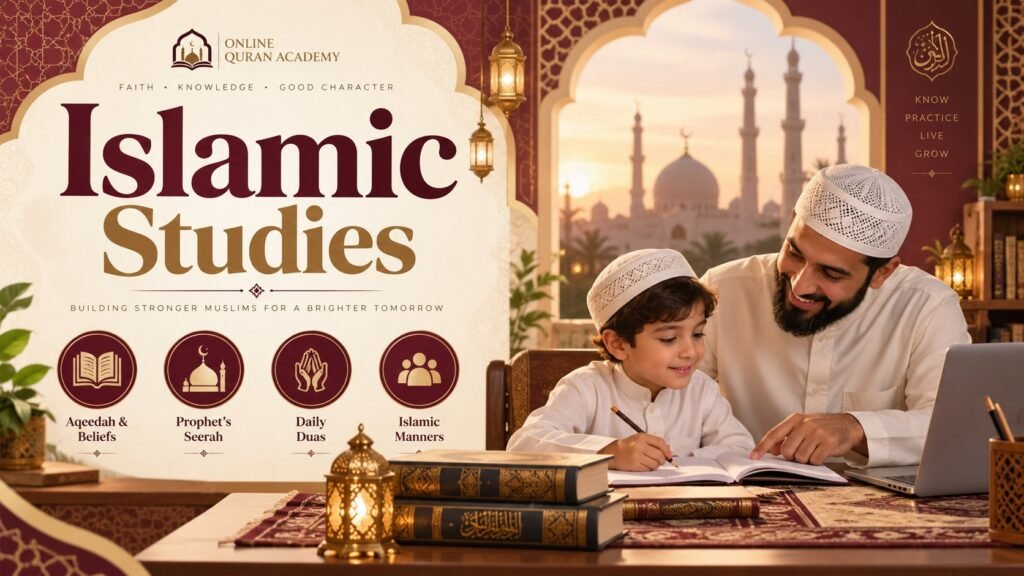
Learning about Islam helps Muslims understand their faith, strengthen their relationship with Allah, and apply Islamic teachings in everyday life. From learning about the pillars of Islam to understanding the life of Prophet Muhammad (peace be upon him), Islamic education provides a foundation for faith, worship, and good character.
Our Islamic Studies Course Online is designed for learners who want to build their knowledge of Islam in a structured and accessible way. Students can explore essential Islamic beliefs, worship, manners, prophetic teachings, and other important topics according to their learning level.
Whether you are looking for Islamic education for your child or want to improve your own understanding of Islam, a guided learning plan can help you study step by step. Start learning about Islam and build a stronger foundation in your faith.
What is an Islamic Studies Course?
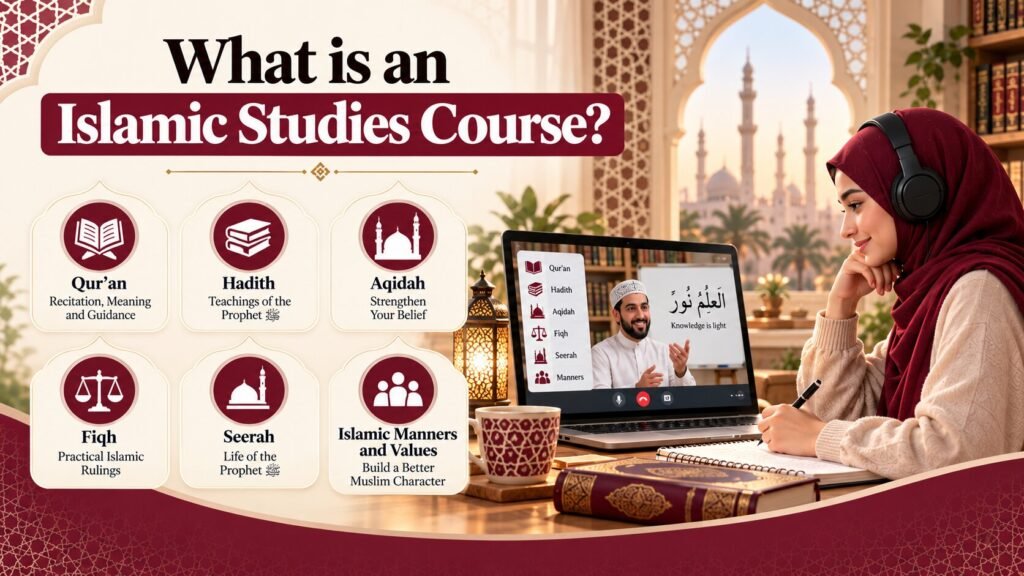
An Islamic Studies course teaches essential knowledge about Islam, including beliefs, worship, Islamic history, the Quran, the Sunnah, and the character and teachings of Prophet Muhammad (peace be upon him).
It helps learners understand not only what Muslims practice, but also the meaning and purpose behind important acts of worship and everyday responsibilities.
The topics covered depend on the student’s age, prior knowledge, and course syllabus. Beginners may start with the basics of faith and worship, while more advanced learners may explore Islamic history, prophetic stories, and selected religious texts in greater detail.
Who Can Join Our Online Islamic Studies Course?
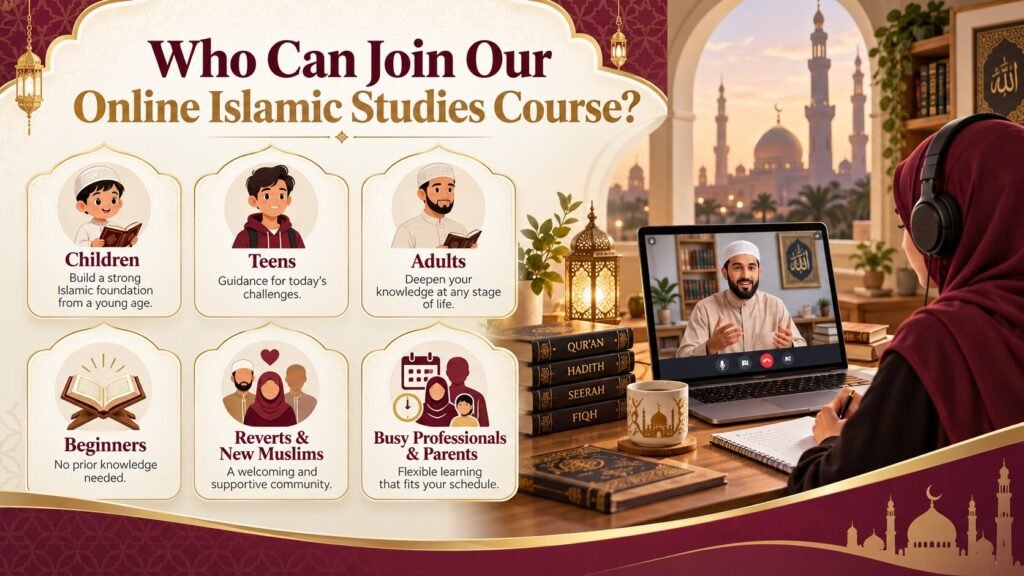
Islamic education can benefit learners at different stages of life.
Children: Build A foundation in Islamic beliefs, manners, stories of the prophets, daily duas, and basic worship.
Teenagers: Develop a clearer understanding of Islamic principles, responsibilities, character, and the importance of faith in daily decisions.
Adults: Refresh foundational knowledge and explore Islamic teachings in a structured learning environment.
Beginners: Start with essential topics and gradually progress as their understanding develops.
Families: Support continued Islamic learning at home and encourage discussions about faith, worship and good character.
The recommended starting level should depend on each student’s age, existing knowledge, and learning goals.
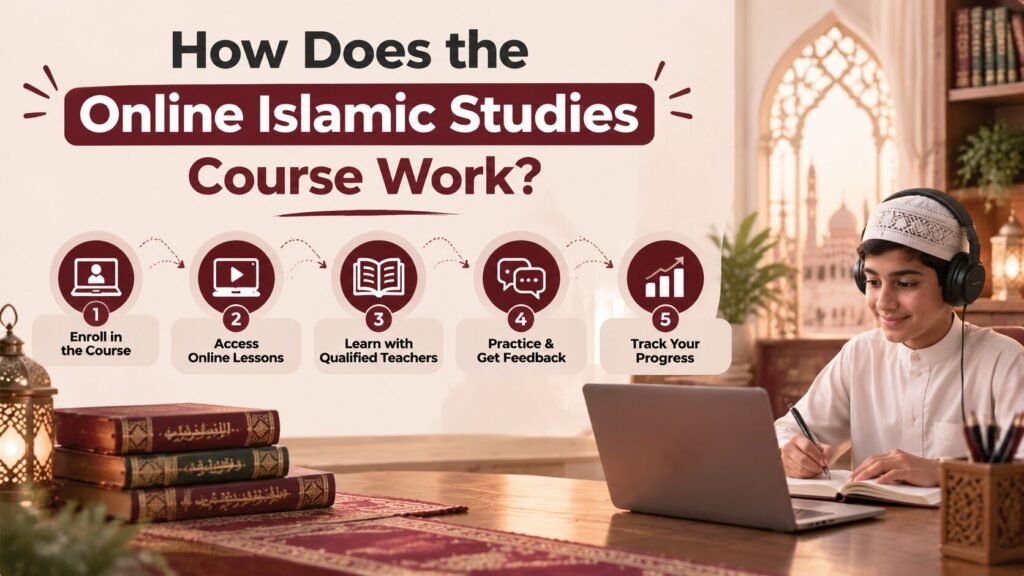
How Does the Online Islamic Studies Course Work?
A clear learning process can help students approach Islamic education with confidence.
Step 1: Identify Your Learning Goals
Decide whether you want to focus on basic beliefs, Salah, Islamic manners, the Seerah, daily duas, or a broader introduction to Islam.
Step 2: Choose a Suitable Level
Begin with lessons that match the student’s age and current knowledge.
Step 3: Study One Topic at a Time
Learn key concepts through explanations, examples, and relevant Islamic sources.
Step 4: Review and Ask Questions
Revisit important lessons and clarify areas that need further explanation.
Step 5: Apply What You Learn
Where appropriate, put the lessons into practice through worship, good manners, reflection, and daily habits.
Contact The academy to confirm the available curriculum, teaching language, lesson format, schedule and enrollment process.
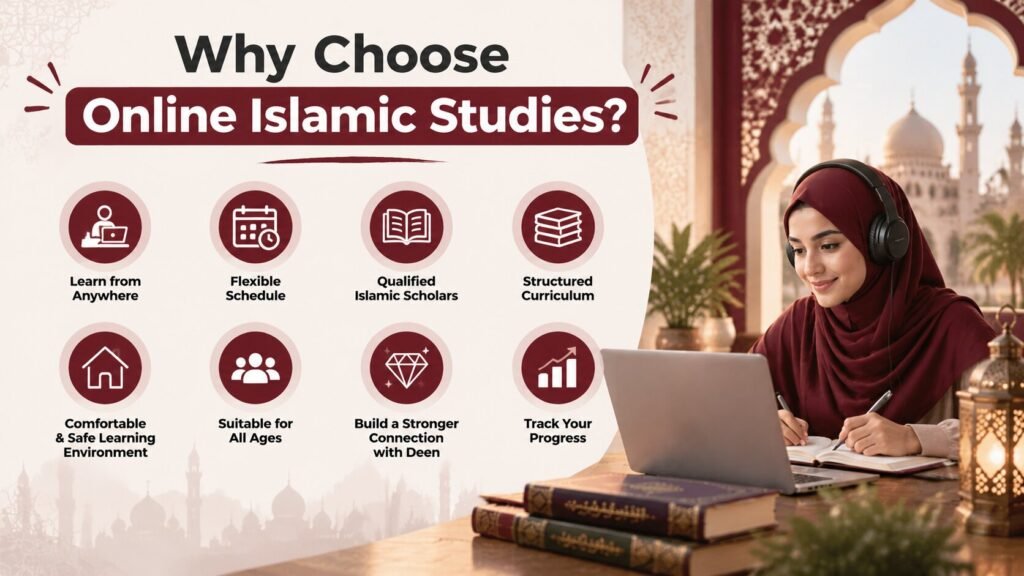
Why Choose Online Islamic Studies?
Online learning can make Islamic education more accessible for students and families with busy schedules.
Learn from Home
Study from a comfortable location with an internet-connected device, reducing the need to travel to a physical classroom.
Follow a Structured Learning Path
Start with foundational topics and progress to more detailed lessons as your knowledge grows.
Study at a Manageable Pace
Regular lessons and revision can help students build knowledge gradually instead of trying to learn everything at once.
Support Children’s Islamic Education
Parents can look for a learning plan that introduces Islamic beliefs, worship, and good manners in language appropriate for their child’s age.
Continue Learning as an Adult
Adults can make time for Islamic education alongside work, family responsibilities, and other commitments.
Frequently Asked Questions
What is taught in an Online Islamic Studies course?
Topics may include Islamic beliefs, the Five Pillars of Islam, Salah, the Quran, Hadith, the Seerah, Islamic history, daily duas, and good manners. The exact subjects depend on the course syllabus.
Is this course suitable for Children?
Islamic Studies can be suitable for children when lessons are adapted to their age and understanding. Parents should confirm the academy’s available age groups, curriculum, and teaching arrangements.
Can Adults join an Islamic Studies Course Online?
Yes. Adults can study foundational Islamic topics or revisit subjects they want to understand better. The recommended course level depends on their previous knowledge and learning goals.
Can this course help my child answer questions from friends about Islam?
Yes. Building real understanding, not just memorized facts, is a core goal of this course, so students feel confident explaining and discussing their faith.
Can I request a female teacher?
Yes, female teachers are available and can be requested when booking your free trial class.
Is there an age requirement to start?
There is no strict age requirement. Lessons are adjusted to match the student’s age, whether that is a young child or an adult.
Do you offer a free trial class?
Yes. We offer a free trial so you can see how our teachers work with your child before you commit to a course.
Start Learning About Islam Today
Learning about Islam is a continuous journey that combines knowledge, reflection, worship, and good character. A structured Islamic Studies course can help you understand foundational beliefs, explore the life of Prophet Muhammad (peace be upon him), and learn how Islamic teachings guide everyday life.
Whether you are looking for Islamic education for your child or want to strengthen your own understanding, begin by choosing topics that match your learning goals. Explore The Islamic Studies Course at Online Quran Academy and take the next step in your Islamic learning journey.